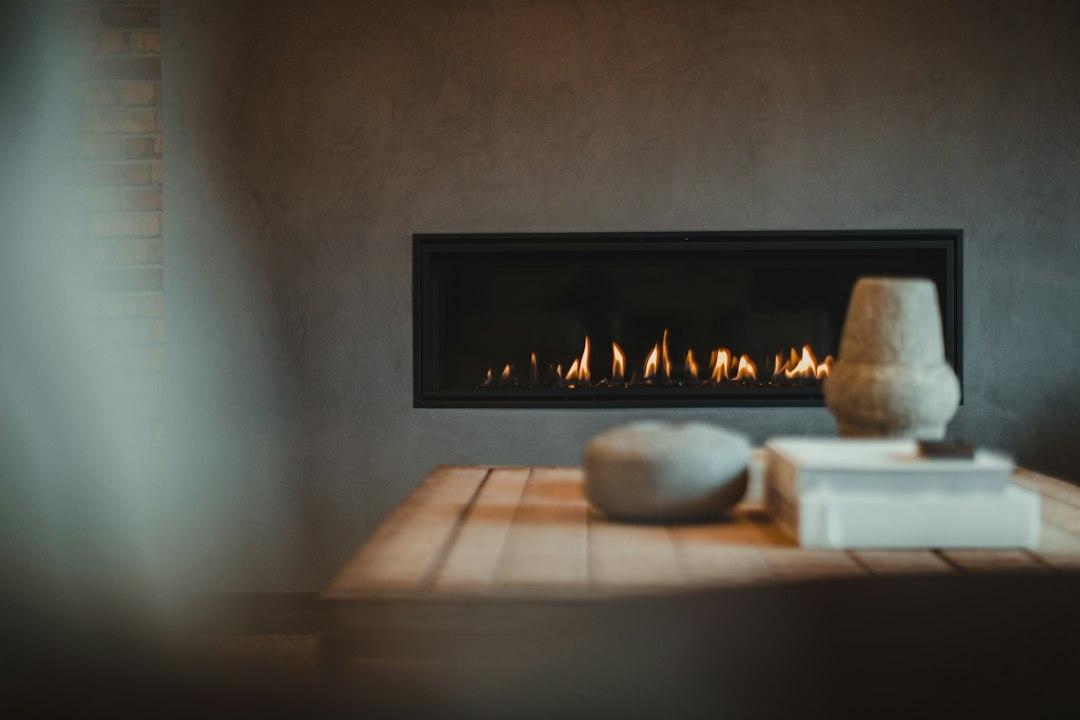
Think of a gas insert as a closed steel heater parked inside the brick opening you already have, with its exhaust carried up the old chimney by a liner of its own. In Bell Gardens it is the usual way to keep using a fireplace whose clay flue has cracked, or to turn a smoky, draughty opening into a heater with a thermostat. Thorne Chimney Sweep installs inserts for $2,700 to $5,450, liner included. This post covers what moves the price inside that range, how we size the flue, and when a different appliance makes more sense.
Sizing starts in the flue, not the room
An insert is only as good as its vent. The maker sets an exhaust collar size, and the liner has to carry that size unbroken from the insert to the cap. A liner that is too large lets exhaust cool before it reaches the top, so it condenses and runs back down. Going smaller than the maker allows is not an option at all.
So the first measurement we take is not the firebox opening. It is the inside of the clay flue. The camera tells us whether a round liner will pass straight down, whether an offset in the tiles calls for an oval or flexible section, and whether a tight bend at the smoke chamber needs opening up first. We also look at the damper, because most inserts need the old damper plate taken out or fixed open before the liner can pass.
Sizing the box
The insert also has to suit the opening and the room. It needs to fit the firebox with space for its surround panel, and its heat output should match the space it warms. A big insert in a small living room runs on low most of the time, which wastes gas and can soot the glass. We measure the width, height and depth of the opening and the hearth in front of it, then bring two or three unit sizes to the quote so you can choose.
What moves the price within $2,700 to $5,450
The unit itself. A plain insert with a standing pilot and a wall switch sits toward the lower end. Electronic ignition, a blower and a remote or thermostat move it up.
Liner length. A one-storey stack takes less liner than a two-storey one.
The gas supply. A gas line with a shutoff already at the hearth needs little work. A new run from the meter costs more and may need a plumber.
Prep in the firebox. Removing the damper, clearing a heavily sooted smoke chamber or repairing a cracked firebox floor before the insert goes in.
The top. A new top plate and cap close the old flue around the liner.
With those in mind, ask for an insert figure sized to your flue. The quote names the unit, the liner diameter and length and any prep work, so you can set it against another quote line by line.
Three ways to a gas fire
| Option | What goes in | Price at Thorne |
|---|---|---|
| Gas logs in the open firebox | Ceramic logs and a burner, venting up the old flue | Written figure after a visit |
| Insert in the brick fireplace | Sealed box with its own liner up the chimney | $2,700 to $5,450 |
| New sealed unit where no chimney stands | Framed into a wall, venting through a short pipe outside | $4,350 to $8,700 |
Gas logs are mostly for looks. They give little heat, still need a sound flue and must have the damper clamped open. An insert gives real heat and solves a cracked flue for gas use. A new sealed unit makes sense when the chimney is too far gone to be worth saving, or sits in the wrong room.
Gas and the no-burn days
Bell Gardens is inside the South Coast AQMD, and its Rule 445 bars wood fires on the winter days the district declares no-burn. Gas fireplaces and inserts are not covered by those bans. For owners who want a fire on a cold evening without checking the air forecast first, that is one more reason to switch.
What an insert cannot fix
The insert's liner stands in for a cracked flue, but the brick around it still has to hold. Loose brick above the roof, a broken crown or a leaking stack all need repair before or with the install. If the camera shows the stack has moved, read rebuild or reline before deciding. If the flue is sound and you would rather keep burning wood, our flue liner cost post covers relining for wood instead.
After the install
Once the insert is in, we light it, watch the flame through the glass and run the camera down the new liner from the top before the cap goes on, so the report shows the liner whole from collar to cap. Those frames come with the paperwork for the unit. A yearly look at the pilot, the glass seal and the cap keeps the insert burning clean; the gas fireplace cleaning page covers that visit.
The scan comes first
Every insert quote we write follows a camera scan of the flue, $380, because sizing without it is guesswork. The fireplace inserts page describes the install itself, and gas fireplace repair covers units already in place.
Booking
We fit inserts across Bell Gardens, Lynwood, Norwalk and Los Angeles. Use our contact page to say what burns in the fireplace today and what you want from it next; we will set up the flue scan and write the insert figure from what the camera shows.
See Your Own Flue on Camera
Thorne runs a camera up the chimney, shows you each tile joint and liner seam, and writes up what the flue needs before any price is set. Crews work from Bell Gardens across Lynwood, Norwalk, the City of Los Angeles and the wider county.